
News
Industry Updates, Product Insights & Market Information



Send Us A Message
When bulk industrial chemical raw materials lower production costs
A lower quoted price does not automatically mean lower production cost. Bulk industrial chemical raw materials reduce costs when the savings from larger purchase volumes are greater than the added cost of inventory, financing, storage, handling, quality risk, and supply exposure. For a budget owner reviewing a purchase request, the useful question is not “How large is the discount?” but “What is the landed and usable cost per unit over the period we can safely hold this material?”
This decision often arises when a production team expects stable demand and asks to move from frequent smaller orders to a container load, tanker quantity, full pallet purchase, or longer-term volume commitment. The proposal may look attractive on a unit-price basis. Yet a bulk purchase can create hidden expense if material sits too long, requires special storage, ties up working capital, or becomes difficult to use after a formulation change. The best cost outcome comes from matching order size to actual consumption, storage capability, quality controls, and supply conditions.
Start with total usable cost, not the supplier’s unit price
Industrial chemical purchasing has several cost layers. A price reduction at the invoice stage may be offset by expenses that appear later in operations or accounting. This is especially relevant for materials purchased across borders, where freight terms, packaging formats, export documents, port handling, and delivery timing can materially change the real cost of supply.
A practical approval review should separate the following components:
- Material price: the quoted cost per kilogram, tonne, litre, drum, bag, or other commercial unit.
- Inbound logistics: freight, insurance, terminal charges, customs-related costs where applicable, domestic transfer, and unloading.
- Packaging cost: whether the material is supplied in bags, drums, IBCs, bulk containers, tankers, or another format.
- Inventory carrying cost: the financial cost of capital tied up in stock, plus warehousing, insurance, stock control, and internal handling.
- Quality loss: rejected lots, off-spec material, contamination, moisture uptake, damaged packaging, expired stock, or material that cannot be used in the intended process.
- Production impact: line interruptions, additional testing, cleaning, reformulation, lower yield, or higher waste caused by inconsistent raw material performance.
The relevant measure is therefore not simply purchase price. It is the cost of material that can actually be released into production and converted into saleable output. A cheaper shipment that produces more waste or requires extra process adjustment may be more expensive than a higher-priced lot with stable specifications and complete documentation.
When a larger order usually improves the cost position
Bulk purchasing tends to work well where consumption is predictable, the chemical has an appropriate shelf life, and the manufacturing process uses a consistent specification. These conditions allow the buyer to spread fixed procurement and transport costs across more material without creating excessive inventory risk.
The economics are often favorable when each shipment carries fixed charges. Documentation preparation, booking, export handling, customs clearance, local delivery, and internal receiving all require administrative effort regardless of whether the shipment contains a small quantity or a near-full load. Increasing volume can reduce these fixed costs per unit. The same principle applies to laboratory release work: if incoming verification is required for every lot, fewer and larger deliveries may lower the verification cost per kilogram.
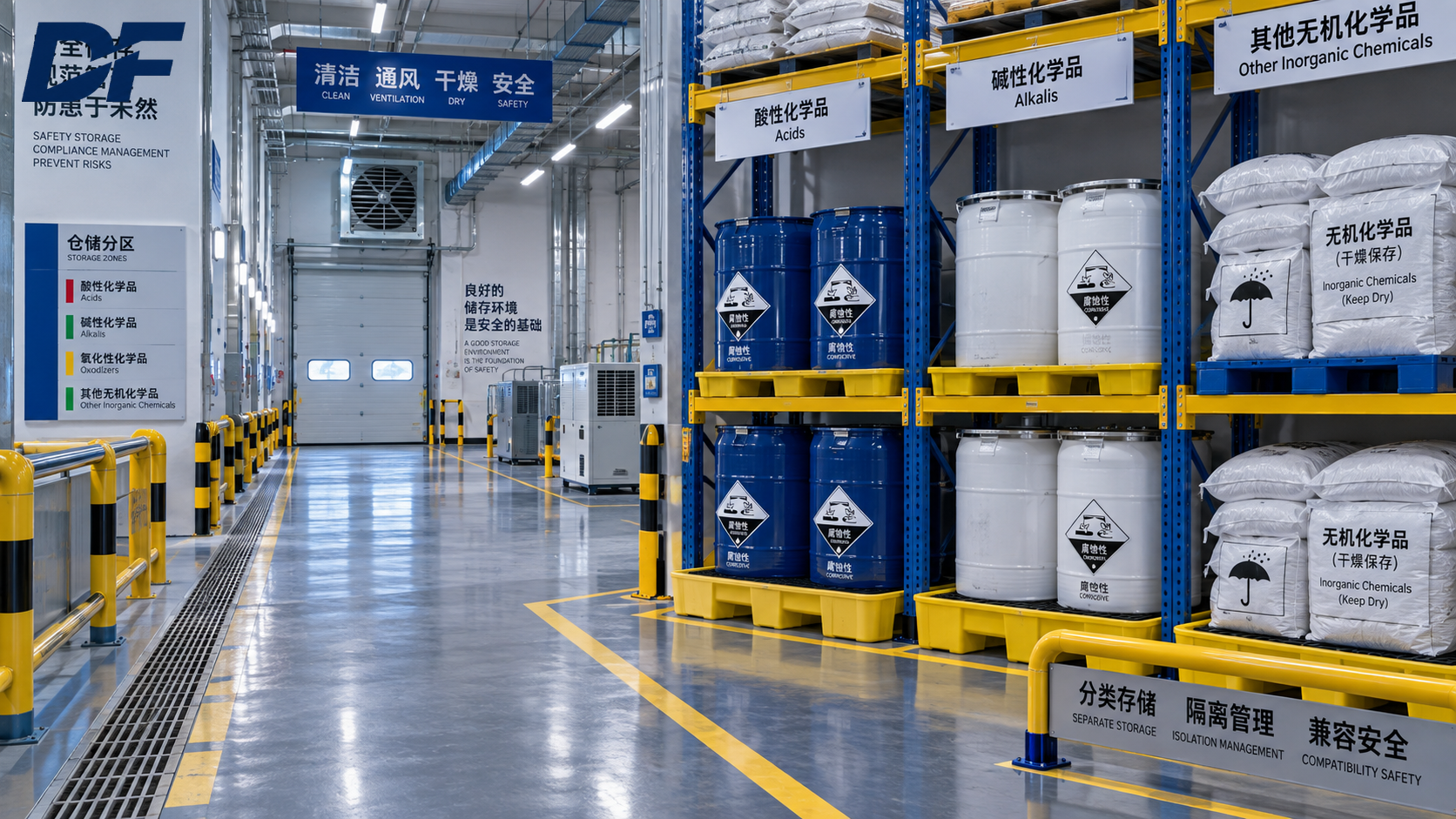
Packaging is another common source of savings. Materials delivered in smaller drums or bags may generate higher packaging cost, more unloading time, more warehouse movement, and more empty-container waste. Where the plant can safely receive a larger format, such as IBCs, bulk bags, or tanker delivery, the reduction in packaging and handling can be meaningful. That advantage should be measured against any new equipment, cleaning, transfer-line, or containment requirements.
Bulk orders also help when supply reliability has direct financial value. A raw material shortage can force emergency purchases, expedited freight, reduced production runs, or changeovers to an alternative formulation. If the material is critical and supply lead times are long or variable, maintaining a calculated quantity of buffer stock may cost less than the disruption caused by a shortage. In that case, inventory is not merely a warehouse expense; it is part of continuity planning.

The point where bulk becomes a false saving
The cost logic changes when a larger purchase extends far beyond the normal consumption cycle. A chemical may remain technically within its shelf-life period yet still become harder to use because of settling, phase separation, moisture absorption, loss of activity, viscosity changes, crystallization, or contamination introduced during repeated handling. For some materials, storage conditions are just as important as time. Temperature limits, humidity control, nitrogen blanketing, segregation, and compatible packaging can all affect whether stock remains usable.
Slow-moving inventory creates a second problem: the business loses flexibility. Production demand may decline, a customer specification may change, a formula may be revised, or a process may switch to a different grade. The larger the committed inventory, the more costly such changes become. This is particularly important for specialty additives, intermediates, pigments, catalysts, surfactants, resins, and other materials used in varying formulations or irregular production schedules.
Buying too much from one source can also increase concentration risk. A supplier may be reliable, but a large order that occupies most available storage leaves little room to react to a quality issue. If the incoming material does not meet the agreed specification, the plant may face the difficult choice of delaying production or attempting to use stock that requires extra adjustment. A lower price does not compensate for a lot that cannot be consistently processed.
Use demand stability to set an appropriate order size
Before approving a bulk commitment, review actual consumption rather than forecast demand alone. A forecast is useful, but it should be tested against recent production patterns, seasonal changes, planned shutdowns, customer order visibility, and any known product transitions. Materials used across several product lines may support a larger purchase because demand is diversified. Materials dedicated to one intermittent product require a more conservative approach.
A simple decision method is to estimate how many weeks or months of supply the order represents under realistic usage. Then ask whether the business can safely hold that quantity without creating expiry, storage, or working-capital concerns. The appropriate coverage period will vary by chemical and operation, but it should be connected to lead time and supply risk rather than chosen only because a volume discount is available.
Calculate the savings against carrying cost and risk exposure
A finance review does not need a complicated model to identify weak bulk proposals. Start with the incremental quantity: the portion of the proposed order that exceeds the normal replenishment quantity. The first portion may be needed regardless of discount; the extra quantity is where carrying cost and risk should be tested.
For that incremental quantity, calculate the direct purchase saving, then compare it with the expected cost of holding and managing it. Carrying cost includes the cost of funds, warehouse space, internal movement, insurance, and any additional controls required for the material. The analysis should also consider foreseeable loss factors. These may include a reasonable allowance for handling damage, repackaging, sample testing, expiry risk, and the possibility that part of the stock will become unsuitable for planned use.
Quality risk deserves separate attention because it can be disproportionately expensive. Industrial Chemical Raw Materials are not interchangeable simply because their names are similar. Differences in assay, moisture, particle size, color, viscosity, impurity profile, pH, active content, or packaging condition can affect production output. A bulk order should be evaluated against the exact specification required by the process, not against a broad product description.
Where a purchase involves a newly approved source or a grade change, the financial case should include the cost of verification before committing to the full volume. An initial sample, a trial quantity, or a first controlled shipment may cost more per unit than a bulk order, but it can prevent a much larger exposure. This is not a rejection of volume purchasing; it is a way to sequence the decision so that price savings follow technical confirmation.
Documentation can determine whether a low-cost shipment is actually usable
Cross-border chemical purchasing often fails at the interface between commercial terms and operational release. Missing or inconsistent documents can delay shipment, customs processing, receiving, internal approval, or production use. The expense may appear as demurrage, storage charges, expedited corrections, delayed production, or unplanned substitute buying.
Before approving a bulk order, confirm which documents are needed for the material and destination, and verify that the supplier can provide them in the required form and timing. Depending on the product and shipment, this may include a certificate of analysis, safety data sheet, packing list, commercial invoice, transport classification information, origin documentation, batch identification, and any customer-specific quality records. The objective is not to accumulate paperwork. It is to ensure that the delivered material can be received, checked, and released without avoidable delay.
Batch traceability matters more in a bulk purchase because a single lot may remain in inventory for an extended period. The receiving process should preserve the link between shipment documents, batch number, test results, storage location, and production use. When a quality question appears later, poor traceability turns a contained issue into a wider inventory and production review.
Check whether the packaging format changes the real economics
A request for a larger order may also be a request for a different packaging arrangement. The commercial saving can be genuine, but the plant must be able to handle the format without creating hidden cost. Drums may be more expensive per unit but easier to isolate by batch, move in smaller quantities, and use in low-volume applications. IBCs can reduce packaging and handling but need appropriate lifting equipment, transfer controls, and space. Bulk tank delivery may offer the lowest packaging cost, yet it requires compatible tanks, receiving procedures, cleaning discipline, and enough consumption to avoid prolonged storage.
Ask operational teams to confirm the full handling path: unloading, storage, sampling, transfer, dispensing, empty-container management, cleaning, and emergency containment. A format that shortens supplier-side packing work but increases plant-side labor may not provide the expected saving. The decision should include both external logistics and internal material movement.
Build flexibility into volume commitments
The choice is not always between a small spot purchase and one large delivery. A volume agreement with scheduled releases can preserve some purchasing leverage while limiting excess stock on site. This approach can be useful when demand is reasonably predictable but warehouse capacity is limited, or when production requires continuity without committing to a full immediate delivery.
Such arrangements need clear commercial and operational terms. The agreed specification should be fixed. Release timing, minimum shipment quantities, packaging format, lead time, quality documentation, batch consistency expectations, and responsibility for freight changes should be understood before approval. A volume commitment without clear delivery mechanics can transfer uncertainty from the supplier relationship into the buyer’s production schedule.
For materials with long international lead times, it may also be sensible to divide supply into a base quantity and a controlled safety quantity. The base quantity covers expected consumption. The safety quantity addresses supply interruptions, but should be justified by lead-time variability and the cost of a production stop, not by a general preference for holding more stock.
Approval questions that reveal whether the saving is real
Before signing off on a bulk chemical purchase, the reviewer should be able to obtain clear answers to a few practical questions:
- How much of the proposed volume will be consumed before the material’s recommended storage period becomes a concern?
- What is the landed cost per usable unit at the proposed volume compared with the normal order pattern?
- Which fixed freight, documentation, receiving, and testing costs are actually reduced?
- Does the larger order require different storage, transfer equipment, or additional internal labor?
- Has the exact grade been technically accepted for the intended process, with agreed quality limits and batch documentation?
- What happens financially if demand falls, a formula changes, or part of the shipment cannot be released?
- Can deliveries be staged while retaining the volume price or other commercial advantage?
A bulk purchase is most defensible when the answer is supported by stable consumption, verified specifications, suitable storage, complete shipment documentation, and a clear reduction in total landed cost. Where one of those elements is uncertain, a staged order, smaller initial lot, or release-based volume arrangement may protect cash flow and production continuity better than the largest available discount.